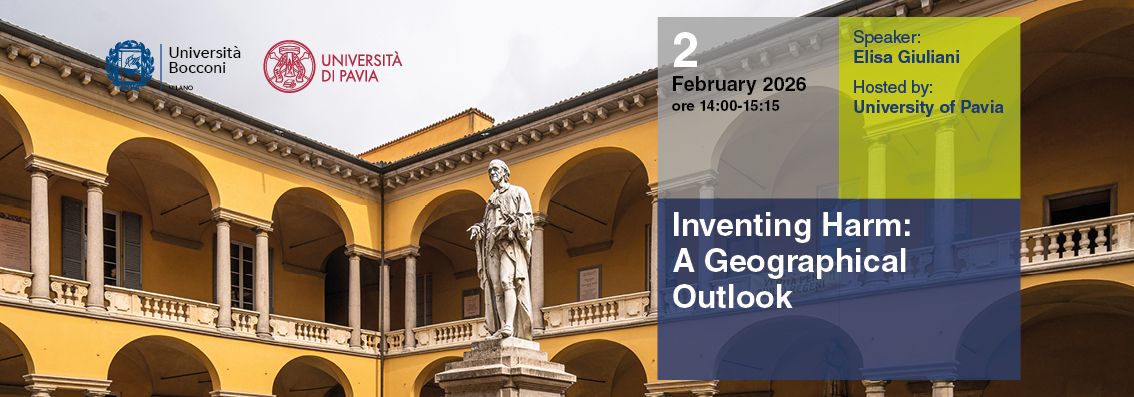
During this seminar, Professor Elisa Giuliani presents recent research that revisits a central assumption in the literature on directed technical change: namely, that with the right mix of policies, governments can steer firms’ R&D efforts away from harmful technologies and toward cleaner alternatives.
Focusing on the 2004 Stockholm Convention—which banned twelve highly toxic persistent organic pollutants (POPs)—the presentation examines whether such regulation has in fact encouraged the development of safer chemical substitutes. Rather than finding evidence of a shift toward genuinely cleaner alternatives, the analysis shows that the Convention has incentivized innovation in so-called “regrettable” chemicals. These compounds are not covered by the Convention but exhibit POP-like characteristics, particularly high toxicity and persistence.
The presentation highlights how regulation can redirect innovation without necessarily reducing environmental risk, and argues that assessing the effectiveness of policies aimed at replacing dirty technologies requires closer scrutiny of the properties of substitute technologies, rather than reliance on regulatory classifications alone.